Pavé (say “pa-vay”) is a setting where many small stones sit close together, so the metal looks paved with diamonds. It is one of the most loved styles in modern jewellery, from engagement ring bands to earrings and pendants. This guide covers where pavé came from, how it holds the stones, the main types, its pros and cons, how to care for it, and what to check when you design it in CAD.
What is a pavé setting?
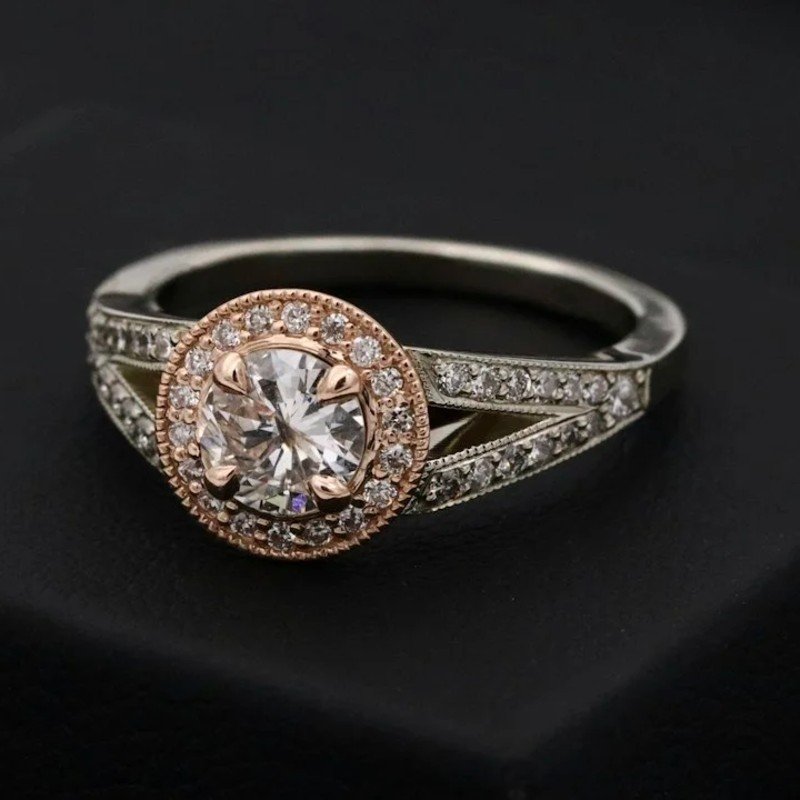
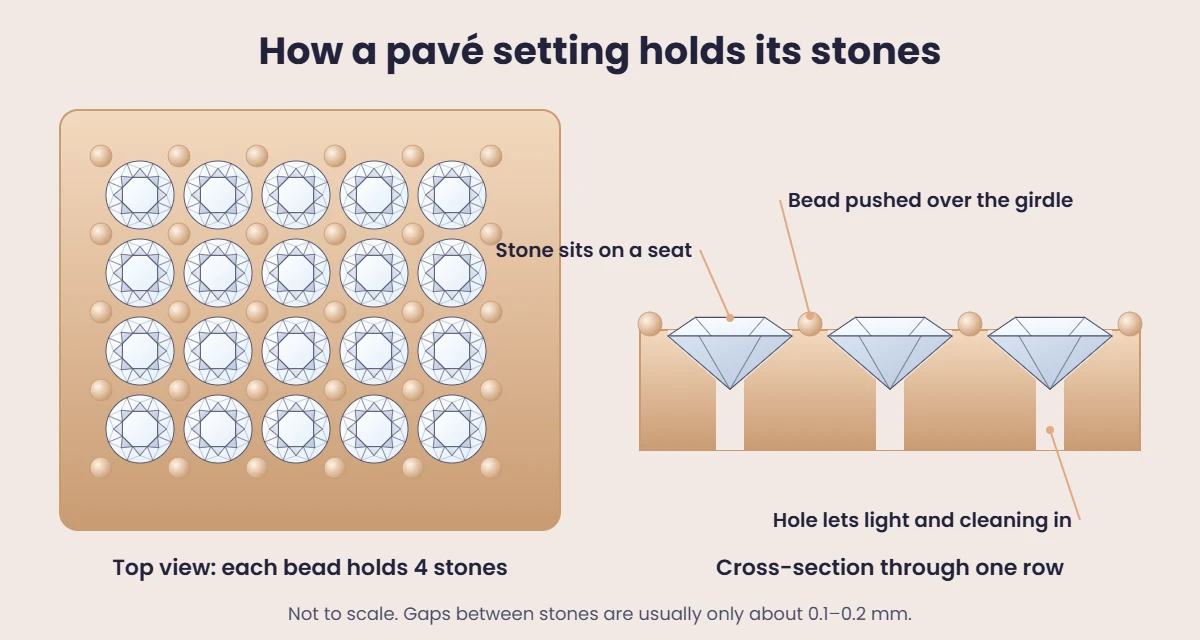
The name comes from the French word for “paved”, like a road made of cobblestones. In a pavé setting, small stones (usually 0.8–2.0 mm) are set in rows or clusters with very little metal showing between them. Each stone sits in its own seat and is held by tiny beads of metal raised from the surface. One bead usually holds the edges of several stones at once.
The result is a continuous carpet of sparkle. Pavé is often used to frame a centre stone (see our Halo Setting page) or to cover the band, the gallery or the whole surface of a piece.
A short history of pavé
- 1700s–1800s: Pavé became popular in France and in Georgian-era Britain. Jewellers covered brooches, buckles and rings with small diamonds or paste stones set close together.
- Victorian and Edwardian eras: Pavé was used on finer, lighter designs, often in platinum or silver-topped gold.
- Late 20th century to today: Magnification, better tools, CAD design and laser welding made micro-pavé possible, with stones under about 1.3 mm. This is the delicate, “all diamond” look you see in most modern bridal rings.
How pavé holds the stones
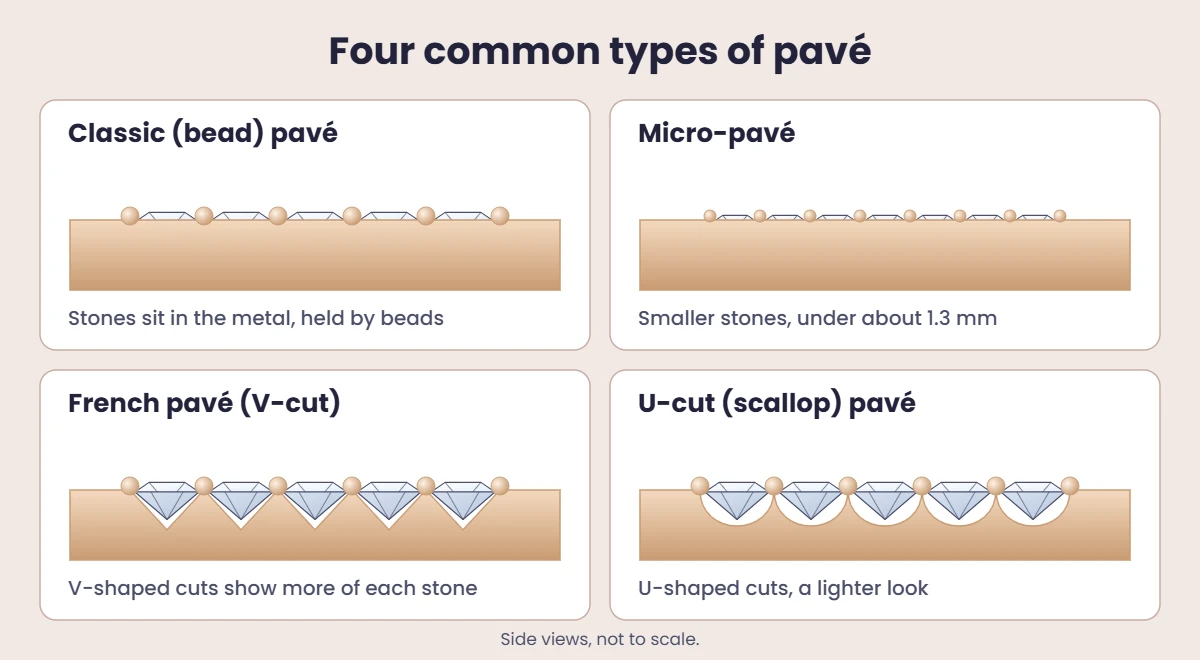
The setter drills a seat for each stone, places it so the girdle sits just below the metal surface, then pushes small beads of metal over the girdle edges. A hole under each stone lets light in from below and makes cleaning easier.
Types of pavé
| Type | How it looks | Best for |
|---|---|---|
| Classic (bead) pavé | Stones held by round beads; a little metal shows between stones | Everyday bands, larger pavé areas |
| Micro-pavé | Very small stones (under about 1.3 mm), almost no metal visible | Bridal rings, halos, fine detail |
| French pavé (V-cut) | V-shaped cuts in the metal under each stone show more of the diamond from the side | Eternity bands, side profiles |
| U-cut (scallop) pavé | U-shaped cuts give a light, scalloped edge | Vintage-style and delicate bands |
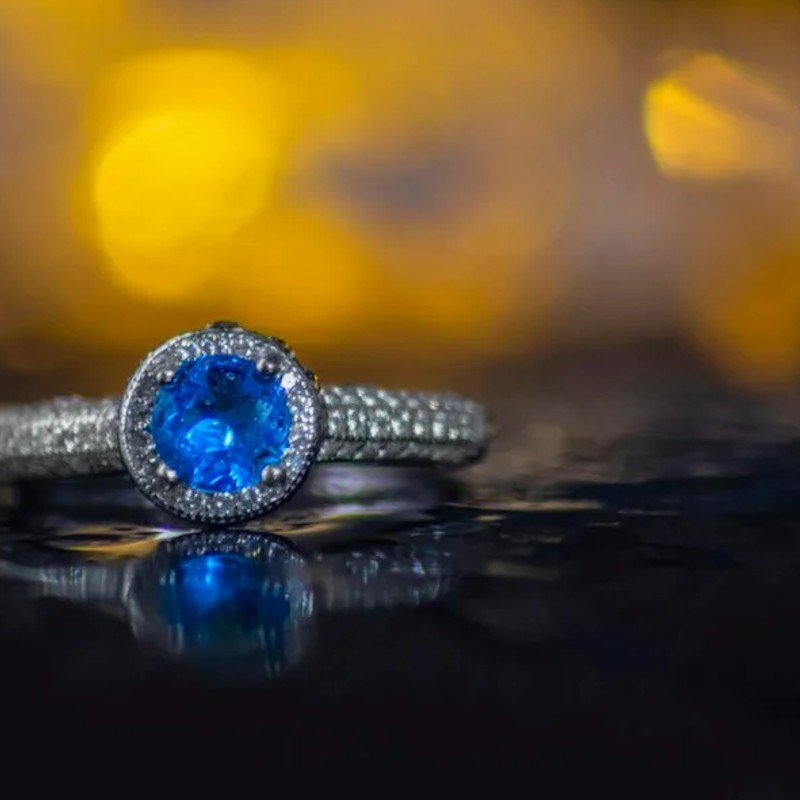
Pavé is not only for diamonds. Sapphires, rubies, emeralds and other gems can be pavé-set too, as long as they are hard enough to take the pressure of the beads.
Pros and cons of pavé
| Pros | Cons |
|---|---|
| Lots of sparkle for the cost, since small stones are cheaper per carat | Small stones can come loose after hard knocks |
| Makes a centre stone look bigger and brighter | Resizing is limited; cutting the band can disturb the stones |
| Works on almost any shape or surface | Dirt collects between stones and needs regular cleaning |
| Can use colourless or coloured gems | Setting labour is high, especially for micro-pavé |
Designing pavé in CAD: quick tips
If you design in Rhino or other CAD software, these points save remakes at the bench. For the full step-by-step process, see our Pavé Setting page.
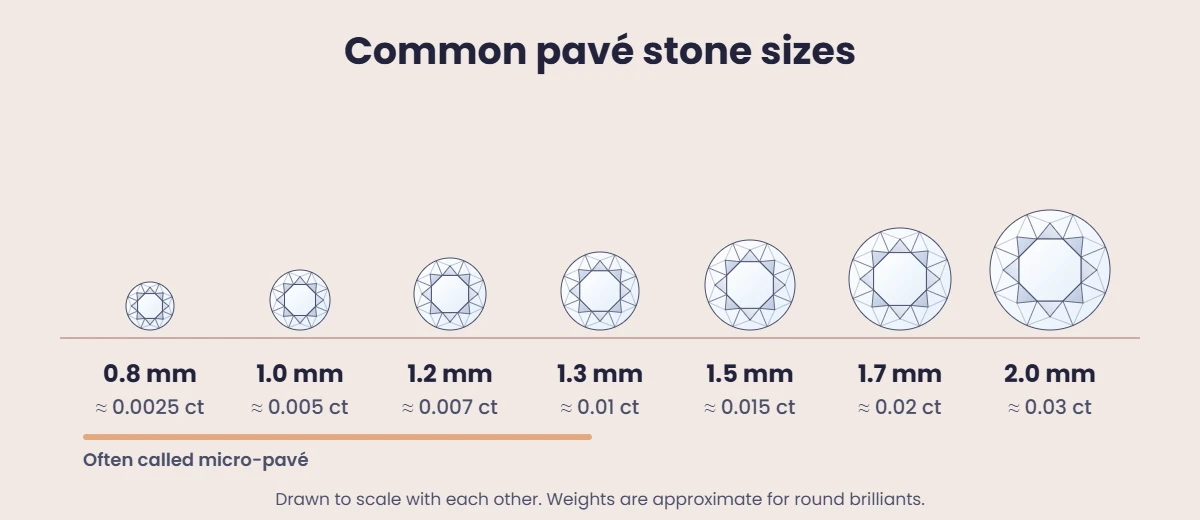
- Use real stone sizes. Model the exact diameters you will buy, not rounded numbers.
- Keep gaps tiny but even. A gap of about 0.1–0.2 mm between girdles is typical. Too wide looks patchy; zero gap risks chipping.
- Leave metal for the beads. The setter needs enough metal between stones to raise each bead.
- Add holes under the stones. They bring in light, save metal weight and make cleaning possible.
- Check metal thickness under the seats. Thin floors can crack during setting or later wear.
- Count and list the stones. Give the setter a stone list by size. Our free Halo & Pavé Stone Counter helps you estimate how many stones fit.
Caring for pavé jewellery
- Clean it gently with warm water, mild soap and a soft toothbrush.
- Avoid harsh chemicals. Ask a jeweller before using an ultrasonic cleaner, since vibration can loosen small stones.
- Take it off for gym, gardening and heavy work.
- Have a jeweller check the stones once or twice a year.
Buying pavé jewellery: what to check
- Look under magnification: stones should sit level, at the same height, with neat, even beads.
- Ask about the stone quality and whether the small stones are natural or lab-grown.
- Choose a jeweller who offers a warranty or free checks for loose stones.
FAQ
What is the difference between pavé and micro-pavé?
Micro-pavé uses smaller stones, usually under about 1.3 mm, with tinier beads, so almost no metal shows.
Is pavé durable enough for an everyday ring?
Yes, if it is well made and you avoid hard knocks. Get it checked by a jeweller now and then.
Can a pavé ring be resized?
Usually only by a small amount. Big size changes can bend the band and loosen the stones.
What is the difference between pavé and a halo?
A halo is a ring of stones around a centre stone. It is usually pavé-set, but pavé can also cover bands and other surfaces.
Watch our jewellery CAD tutorials on the saggy3dm YouTube channel, and read our Diamond Guide for CAD Designers.