Kundan Setting
English
हिन्दी
English
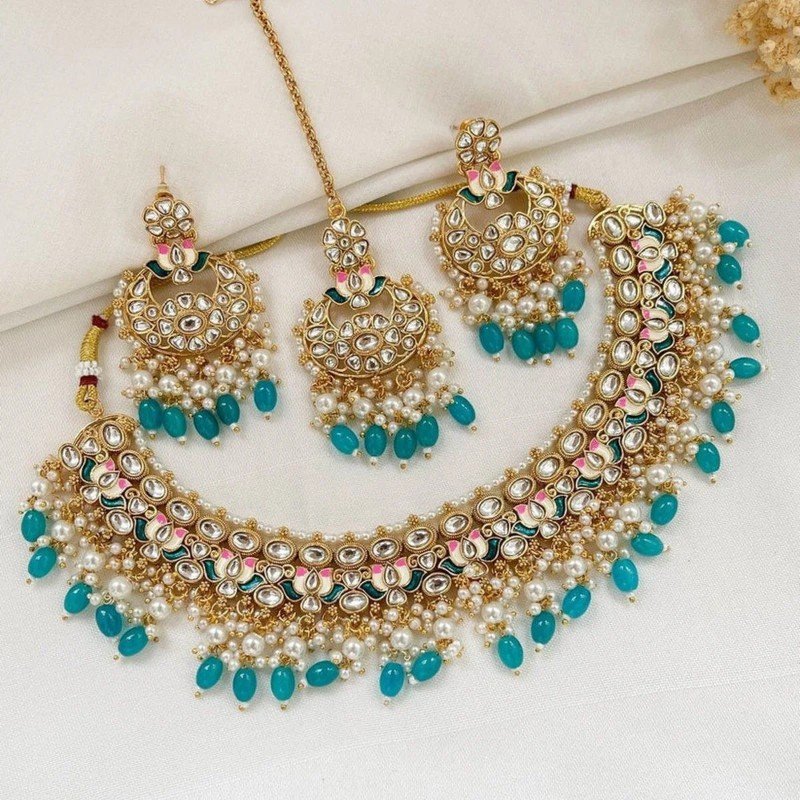
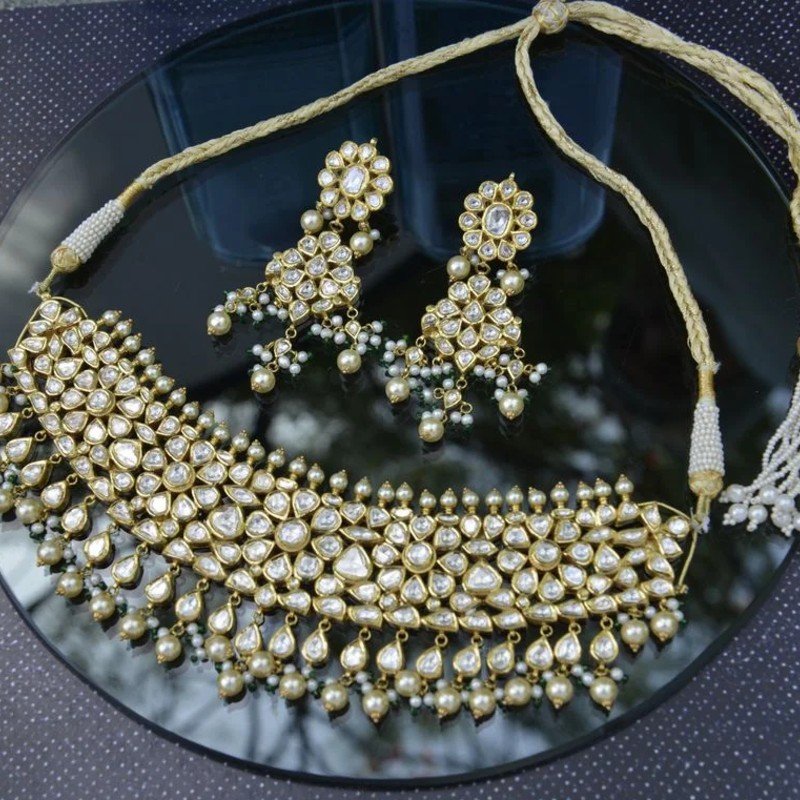
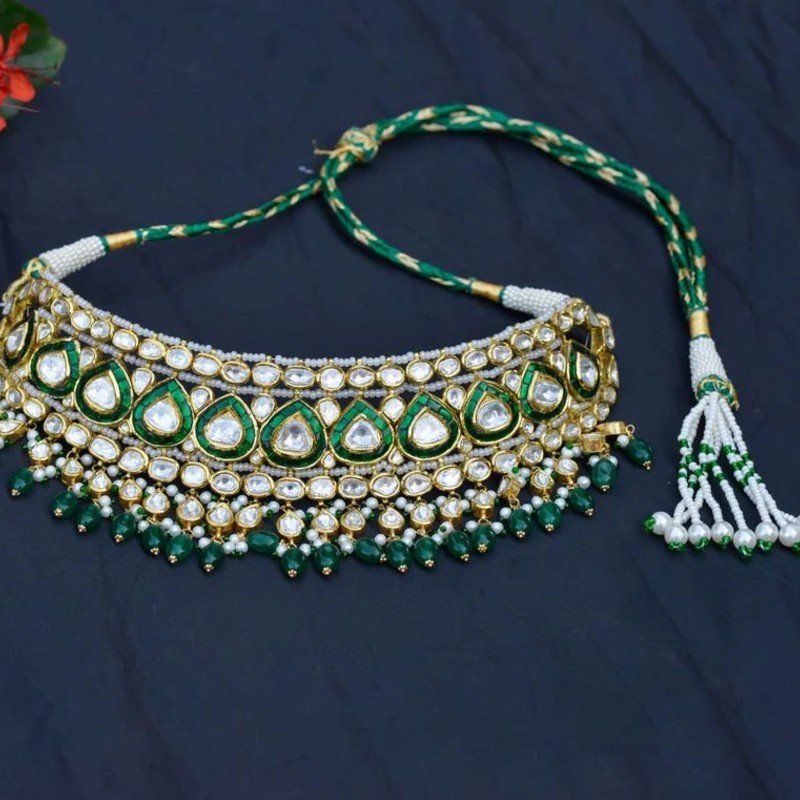
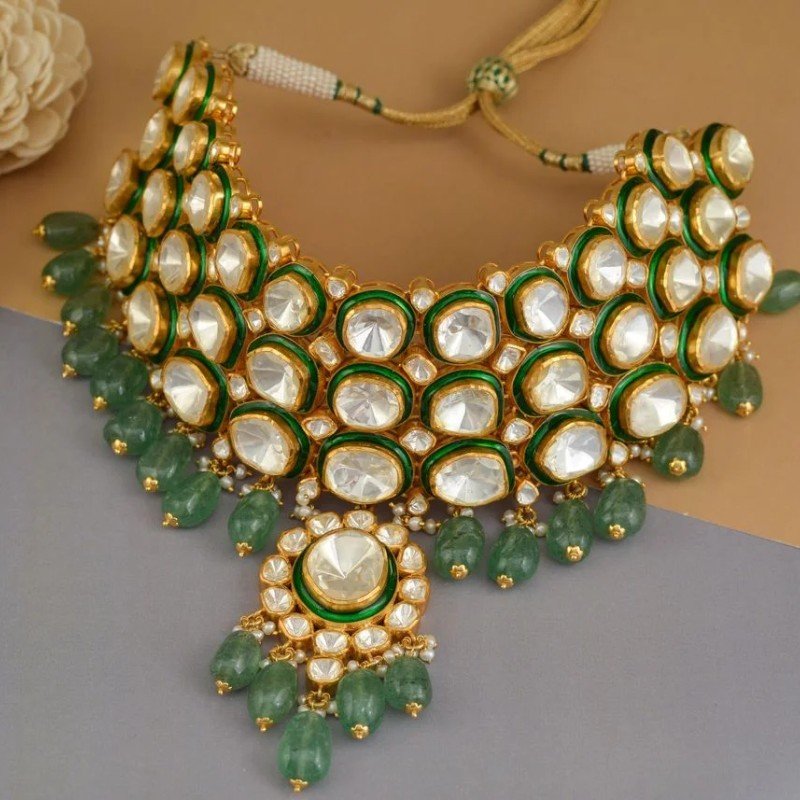
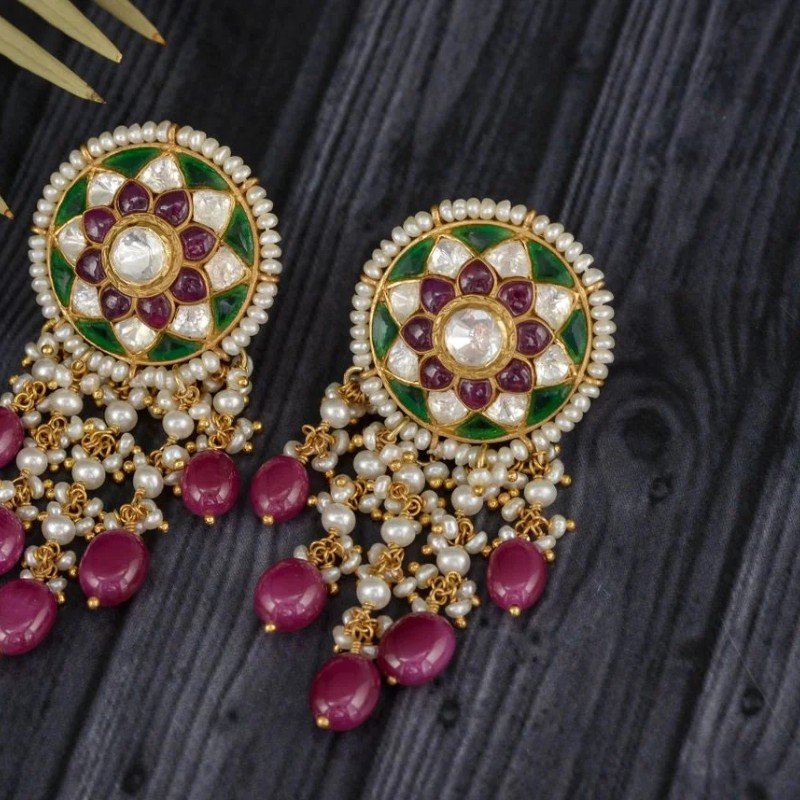
Kundan setting is a traditional Indian way of setting stones in jewelry, famous in Rajasthan, especially Jaipur and Bikaner. Instead of prongs or a bezel, the stones are held in place with very thin sheets of highly refined pure gold, called “kundan”.
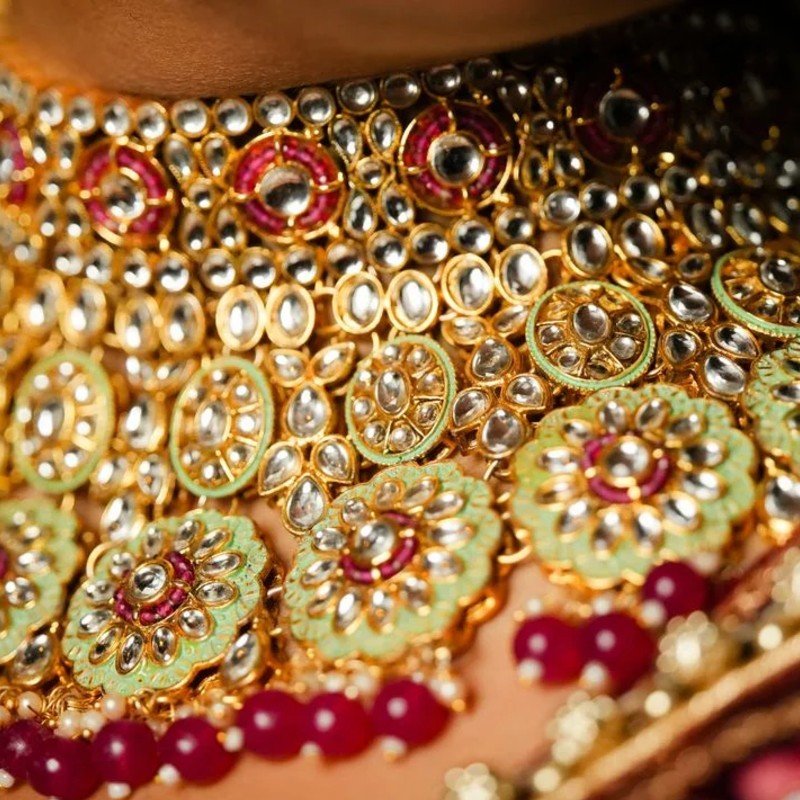
In Kundan work, a gold frame (ghaat) is made first and filled with lac (lakh). The stones are placed on the lac, and then thin strips of pure gold foil are pressed around the edge of each stone to lock it in place. The back of the jewelry is often decorated with colourful meenakari (enamel) work.
Kundan jewelry can use many kinds of stones. The most common include:
Polki: Uncut, natural diamonds with a flat, glassy look. Kundan with polki is one of the most valuable types of bridal jewelry.
Coloured gemstones: Emerald, ruby, sapphire and other gemstones are often used to create rich, colourful designs.
Glass stones: Coloured or clear glass stones are used for more affordable Kundan jewelry with a similar traditional look.
Pearls and beads: Often added as hanging drops (latkan) or borders to complete the design.
People often use the words Kundan, Jadau and Polki together. Jadau is the art of embedding stones into the metal, Kundan is the refined gold foil used to hold them, and Polki is the uncut diamond itself.
In CAD, the base frame and the cavities for the stones can be designed and cast, but the actual Kundan setting is done by hand by skilled craftsmen (kundansaaz). Kundan jewelry should be kept away from water and perfume, and stored carefully. It is a beautiful choice for bridal and festive jewelry like necklaces, chokers, maang tikka and earrings.
How to make Kundan jewelry in CAD (Rhino 3D)
Draw the design in 2D: Trace the design in Top view and draw the outline of every stone. Polki and Kundan stones are often irregular, so match the real stone shapes and sizes.
Make the frame (ghaat): Offset each stone outline outward to get the wall thickness, then Extrude the walls to make a cup (cavity) for each stone.
Make the base: Add a back plate under the cups. If the back will have meenakari, model shallow recessed areas on the back for the enamel.
Add loops and details: Add small loops or holes for pearls, beads and hanging drops (latkan), and add the hooks and links for the necklace or earrings.
Do not model the foil: Leave the cups empty. The stones are set later by hand by the kundansaaz, who fills the cups with lac and presses pure gold foil around each stone.
Check and cast: Check the walls are strong enough, check edges with ShowEdges and weight with Volume, then send the frame for casting.
हिन्दी
कुंदन सेटिंग ज्वेलरी में स्टोन्स सेट करने का एक पारंपरिक भारतीय तरीका है, जो राजस्थान में, खासकर जयपुर और बीकानेर में बहुत प्रसिद्ध है। इसमें प्रोन्गस या बेज़ल की जगह, स्टोन्स को बहुत पतली, शुद्ध सोने की परतों से पकड़ा जाता है, जिसे “कुंदन” कहते हैं।
कुंदन के काम में पहले सोने का एक फ्रेम (घाट) बनाया जाता है और उसमें लाख भरी जाती है। स्टोन्स को लाख पर रखा जाता है, और फिर शुद्ध सोने की पतली पत्तियों को हर स्टोन के किनारे पर दबाकर उसे लॉक किया जाता है। ज्वेलरी के पीछे की तरफ अक्सर रंग-बिरंगा मीनाकारी (इनेमल) का काम किया जाता है।
कुंदन ज्वेलरी में कई तरह के स्टोन्स इस्तेमाल हो सकते हैं। सबसे सामान्य में शामिल हैं:
पोल्की: बिना कटे हुए, नेचुरल डायमंड्स, जिनका लुक फ्लैट और कांच जैसा होता है। पोल्की वाला कुंदन ब्राइडल ज्वेलरी के सबसे कीमती प्रकारों में से एक है।
रंगीन स्टोन्स: एमराल्ड (पन्ना), रूबी (माणिक), सफायर (नीलम) और दूसरे स्टोन्स से रिच और रंगीन डिज़ाइन बनाए जाते हैं।
ग्लास स्टोन्स: रंगीन या साफ कांच के स्टोन्स से कम कीमत में वैसा ही पारंपरिक लुक वाली कुंदन ज्वेलरी बनती है।
मोती और बीड्स: डिज़ाइन को पूरा करने के लिए अक्सर लटकन या बॉर्डर के रूप में लगाए जाते हैं।
लोग अक्सर कुंदन, जड़ाऊ और पोल्की शब्दों को साथ में इस्तेमाल करते हैं। जड़ाऊ स्टोन्स को मेटल में जड़ने की कला है, कुंदन वह शुद्ध सोने की पत्ती है जिससे स्टोन्स पकड़े जाते हैं, और पोल्की खुद बिना कटा डायमंड है।
CAD में बेस फ्रेम और स्टोन्स की जगह (कैविटी) डिज़ाइन करके कास्ट की जा सकती है, लेकिन असली कुंदन सेटिंग कुशल कारीगर (कुंदनसाज़) हाथ से करते हैं। कुंदन ज्वेलरी को पानी और परफ्यूम से दूर रखें और संभालकर स्टोर करें। यह नेकलेस, चोकर, मांग टीका और ईयररिंग्स जैसी ब्राइडल और त्योहार वाली ज्वेलरी के लिए एक सुंदर विकल्प है।
CAD (Rhino 3D) में कुंदन ज्वेलरी कैसे बनाएं
डिज़ाइन 2D में बनाएं: Top व्यू में डिज़ाइन ट्रेस करें और हर स्टोन की आउटलाइन बनाएं। पोल्की और कुंदन स्टोन्स अक्सर अनियमित (इररेगुलर) होते हैं, इसलिए असली स्टोन्स के शेप और साइज से मिलाएं।
फ्रेम (घाट) बनाएं: हर स्टोन की आउटलाइन को बाहर की तरफ Offset करके दीवार की मोटाई लें, फिर दीवारों को Extrude करके हर स्टोन के लिए कप (खाना) बनाएं।
बेस बनाएं: कप्स के नीचे बैक प्लेट लगाएं। अगर पीछे मीनाकारी होगी, तो बैक पर इनेमल के लिए हल्के गहरे हिस्से बनाएं।
लूप और डिटेल्स जोड़ें: मोती, बीड्स और लटकन के लिए छोटे लूप या होल बनाएं, और नेकलेस या ईयररिंग्स के हुक और लिंक्स जोड़ें।
फॉइल मॉडल न करें: कप्स खाली छोड़ें। स्टोन्स बाद में कुंदनसाज़ हाथ से सेट करते हैं, जो कप्स में लाख भरकर हर स्टोन के चारों तरफ शुद्ध सोने की पत्ती दबाते हैं।
चेक करें और कास्ट करें: दीवारें मज़बूत हों यह चेक करें, ShowEdges से एजेस और Volume से वज़न चेक करें, फिर फ्रेम को कास्टिंग के लिए भेजें।
examples